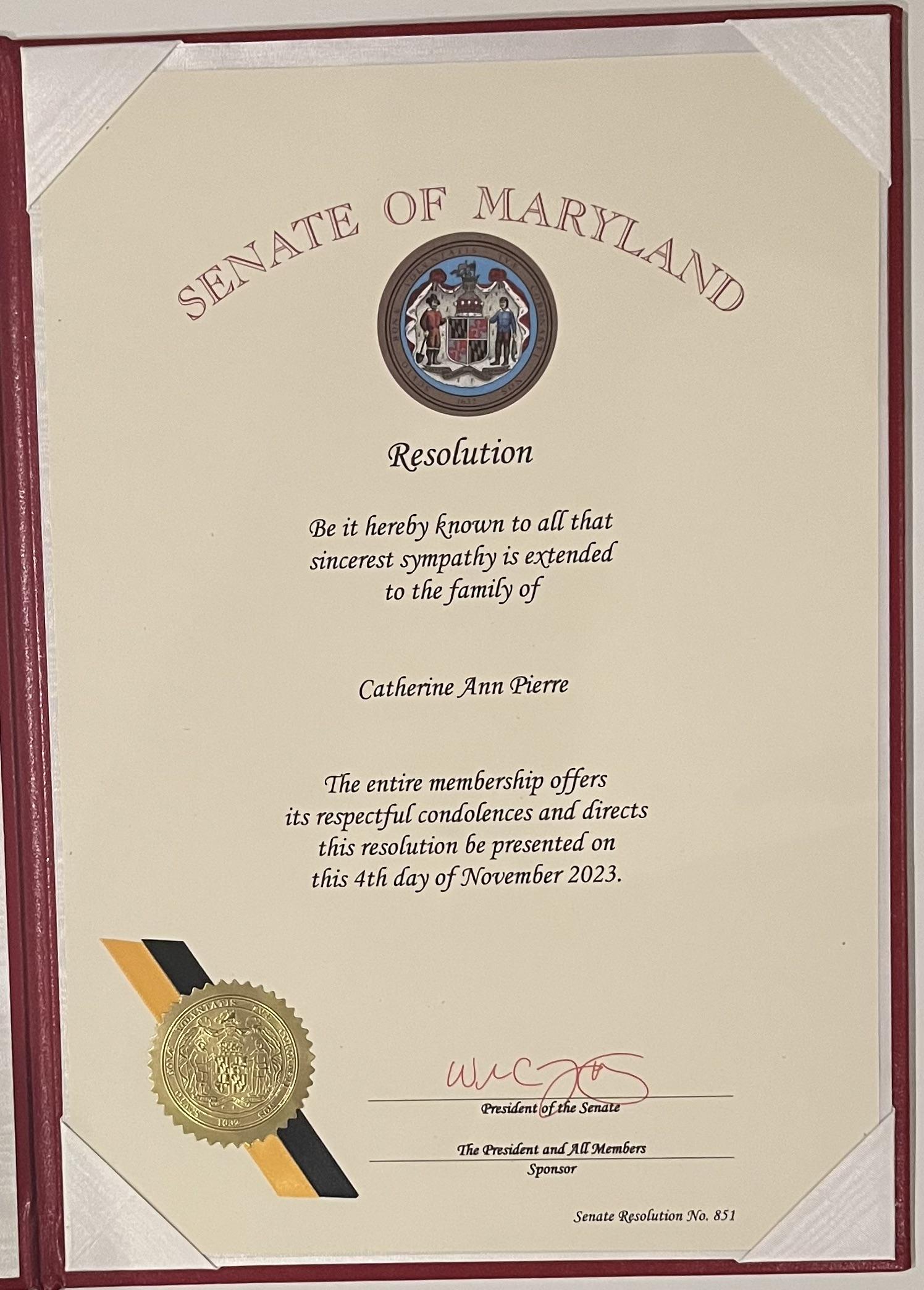
My remarks for yesterday's memorial service, for anyone who could not attend.
For Catherine
I hope you’ll forgive me for reading most of what I have to say today. I wanted to get it right so I wrote it all down. By now, the only way I can think and try to make some sense of life is through writing. That’s how I’ve been dealing with the last nine days, but I’ve found myself demonstrating time and again that there is no comprehending the incomprehensible. Some of our strongest emotions cannot be articulated. That’s why we have music and painting and dance. That’s why we can gaze into each other’s eyes, saying nothing but saying so much. The profound emotions washing over all of us this week just don’t want to fall into sentences and paragraphs, not really. That’s the inescapable nature of this kind of loss. And the nature of grief.
But what we can do is remember. Every one of us has to grieve, that’s the only way we can handle this, but grieving is about us. We all have to do it, it’s the only way we can get on with the work we have to do when we leave here today and it’s the only way we can get on with what Mary Oliver described as our one wild and precious life. But I believe I speak for all of us when I say that I want today to be about Catherine. And the best way I know to do that, on behalf of everyone at Johns Hopkins, is to celebrate Catherine’s memory.
For me, random moments pop into life, of course. We walked a lot in Fells Point or Hampden or Charles Village, wherever our offices were located at the time, as often as not in pursuit of coffee. I recall the day Catherine said, “I seem to be dating Van Smith.” I said, “Seem to be? What, like, accidentally?” On the matter of coffee, for the nine or ten years Hopkins Communications was based in Fells Point, Catherine and I and often other magazine staff would walk down to the Daily Grind. On the way back to the office, I could not have been the only one watching for Catherine to either jostle or squeeze her cup and gloop some coffee out of the sip lid, always on to whatever she was wearing. It seemed to happen every time.
I have never liked the term “role model.” It’s just a grumpy word-nerd thing, but I much prefer the term “exemplar.” I also have long thought the question What is the meaning of life? seems profound but is really a child’s question. The adult question is, How should I live? And for me, and I think for so many in this room today, Catherine was an exemplar of how to live: bright and exuberant and funny, honest and committed and loving.
I had known her for maybe three weeks, after Johns Hopkins Magazine hired her away from the Walters, when I realized how wicked smart she was. I’ve come across no end of smart people at Johns Hopkins, and Catherine could keep up with any of them. But her intelligence always went hand in hand with patience and with compassion. It was always tempered by an understanding that as much as she knew, other people knew a lot too, and that being smart without respect for feelings is like computer intelligence: cold and ultimately inadequate. I experienced Catherine when she was annoyed, a few times with me, and I experienced her when she was angry. But I never experienced her cold.
She was a loyal friend with an infectious laugh and a big heart. When she was appointed editor-in-chief of Johns Hopkins Magazine, one of her first moves was to request that I be made associate editor. She left me a voicemail that night informing me of this and saying she hoped Hopkins would approve, because that would bring her great joy. And I thought, “How extraordinary. What kind of boss tells you that working with you would bring her great joy?” When she put me in the job I’d been a writer for 30 years but never an editor and it showed. Catherine proved to be a patient mentor over my early months on the job when I mostly demonstrated a knack for irritating some of our finest writers because I simply didn’t know how to coax the best work out of anybody. Catherine did know, and I eventually learned, and I owe it all to her.
I never took for granted the trust she placed in me. On our magazine staff and in our communications department—and, no doubt, at the Agora Institute—she had a way of elevating our expectations of ourselves to do our best work, never by criticism or goading, never by edict, always by example, and by way of what always felt like amiable advice. After I succeeded her as the magazine’s editor, she was still my boss and we would meet once a month and I would say, “Okay, what do I need to do better?” And she’d tell me.
Johns Hopkins University loves to talk about its mission as making the world a better place. For a while years ago, as some of you will remember, campus was festooned with banners that read: “Johns Hopkins. Knowledge. For the world.” There was one communications department smartypants who shall remain nameless who suggested an edit: “Johns Hopkins. Sentence fragments. For the world.” But never mind him, the key phrase was “for the world,” and as skeptical as I am of big institutions, and as skeptical as I can be about Hopkins because I know it all too well, I must say that in my 30-year association with the university I have encountered hundreds of people who really do take that mission to heart. Catherine was one of them, and she inspired me to be one of them. She really did want to leave the world a better place. And she did.
I retired from Johns Hopkins Magazine at the end of 2018. Late on my last day in the office, I was putting a few remaining things in a box when Catherine stopped by. She had to leave ahead of me to pick up her girls. We hugged each other, and I said, “Thank you, I love you, and I’ll see you again soon.” Without letting go of me, she said, “Me too.” Those two words are like a tiny scroll now locked in my heart. I am better for having known her, and I see here a room full of people who are better for having known her. So Catherine, thank you, we love you, and we will think of you again soon.