In Praise of Academic Physicians
For the overwhelming majority of us for our entire lives, our medical needs are provided for extremely well by excellent doctors who are in private practice or who work for health maintenance organizations(HMOs), clinics, or hospitals. For the very few of us with rare and unusual symptoms, conditions, or diseases, it is often a matter of life or death to have quick access to those doctors known as academic physicians. These doctors work in teaching hospitals and we in the Bay area are fortunate to have two of the finest in the world nearby at Stanford University and UCSF.
My husband had a history of auto-immune diseases which has attacked different systems or organs of his body. The first of these showed up about ten years ago as idiopathic thrombocytopenic purpura (ITP), a blood condition in which his body produced antibodies that attack his own blood platelets. It was later discovered that he also had auto-immune hepatitis affecting his liver. Three years ago, he landed in the hospital for seventeen days with an auto-immune problem that attacked his gastrointestinal tract. All these problems were difficult to diagnose and treat because the doctor on the front lines in dealing with the problem, like the gastroenterologist, may not be familiar with the autoimmune aspect of the disease, which tends to deepen the severity and accelerate the course of the disease.
Throughout my husband’s medical problems we were helped immensely by the doctors in our family: our cardiologist son, our oncologist daughter, and our pediatrician daughter-in-law. All were familiar enough with the issues of general internal medicine to know when an event or lab result is significant and were able to quickly convey vital information back and forth to the soon-to-be myriads of doctors my husband was seeing.
In the latest auto-immune disorder, my husband’s skin was under attacked. It was not at all obvious at first that this was due to any auto-immune disorder since the problem begins innocuously enough as dry skin, before progressing to eczema, intense itching, psoriasis and then a quick and frightening escalation to a life-threatening condition known as erythrodermic psoriasis, a rare and devastating form that produces burn-like lesions over most of the body. (Jane Brody, a columnist for the New York Times, wrote an excellent article describing psoriasis “For Many Millions, Psoriasis Means Misery”, a condition that her husband suffers from.)
The doctors in my family had much less familiarity with skin problems, but did their best to find my husband excellent doctors in this field. During this time, we saw three dermatologists and an allergist but the treatments they prescribed had little effect on the steady, inexorable progression of the disease.
At last we went back in desperation to my husband’s hematologist/oncologist, a partner in my daughter’s practice, who had treated my husband for his ITP. He took one look at my husband in his current condition and declared that he has never seen anything like this. He quickly composed and faxed a letter providing my husband’s history and symptoms to the Stanford Dermatology Group at Stanford Hospital, marking it urgent.
We were fortunate to get an appointment only five days later on a Monday, but over that weekend, my husband’s condition worsened as he developed a fever, chills, and rapid breathing. At that time his skin was inflamed in over 85% of his body and his legs were swollen. I called my daughter who came over immediately with some antibiotic. Although I wanted to take him to the emergency room at the local hospital, she urged me to hang on until Monday. She said she had seen worst. Also, if he were to check into a hospital now, the hospital personnel would not know how to treat him and the dermatologist at the Stanford group would not have hospital privileges at the local hospital.
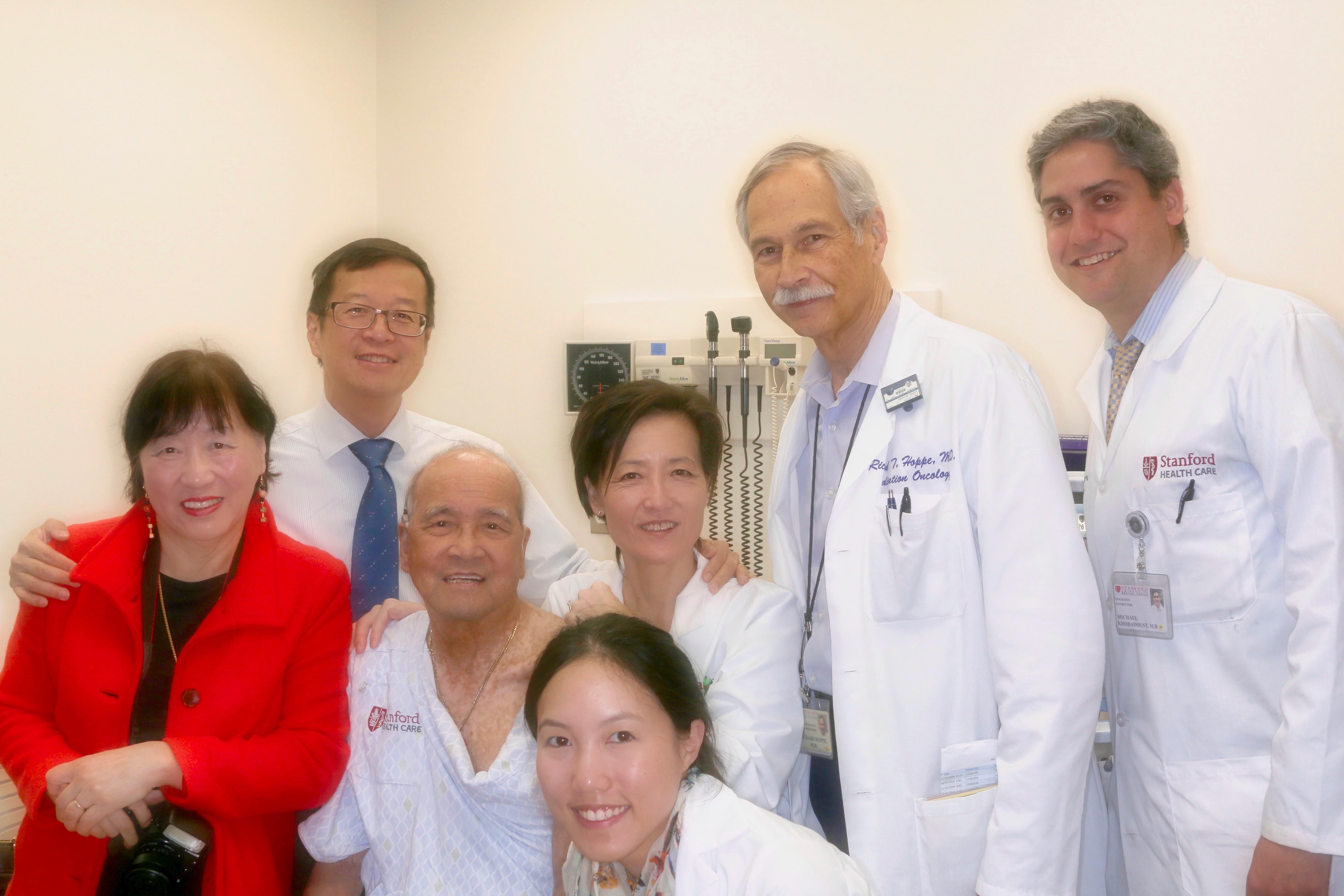
We arrived at our Monday appointment in Redwood City with my husband limping into the office and, while in the waiting room, my husband collapsed with chills. Our fortunes changed with meeting Dr. David Peng, who quickly assessed the situation. He saw the fear in my eyes and heard the panic in my voice. He put his hand on my arm, looked me in the eye, and said: “I have seen this condition before. I know what to do. I have had many patients who were much worse and they all recovered.”
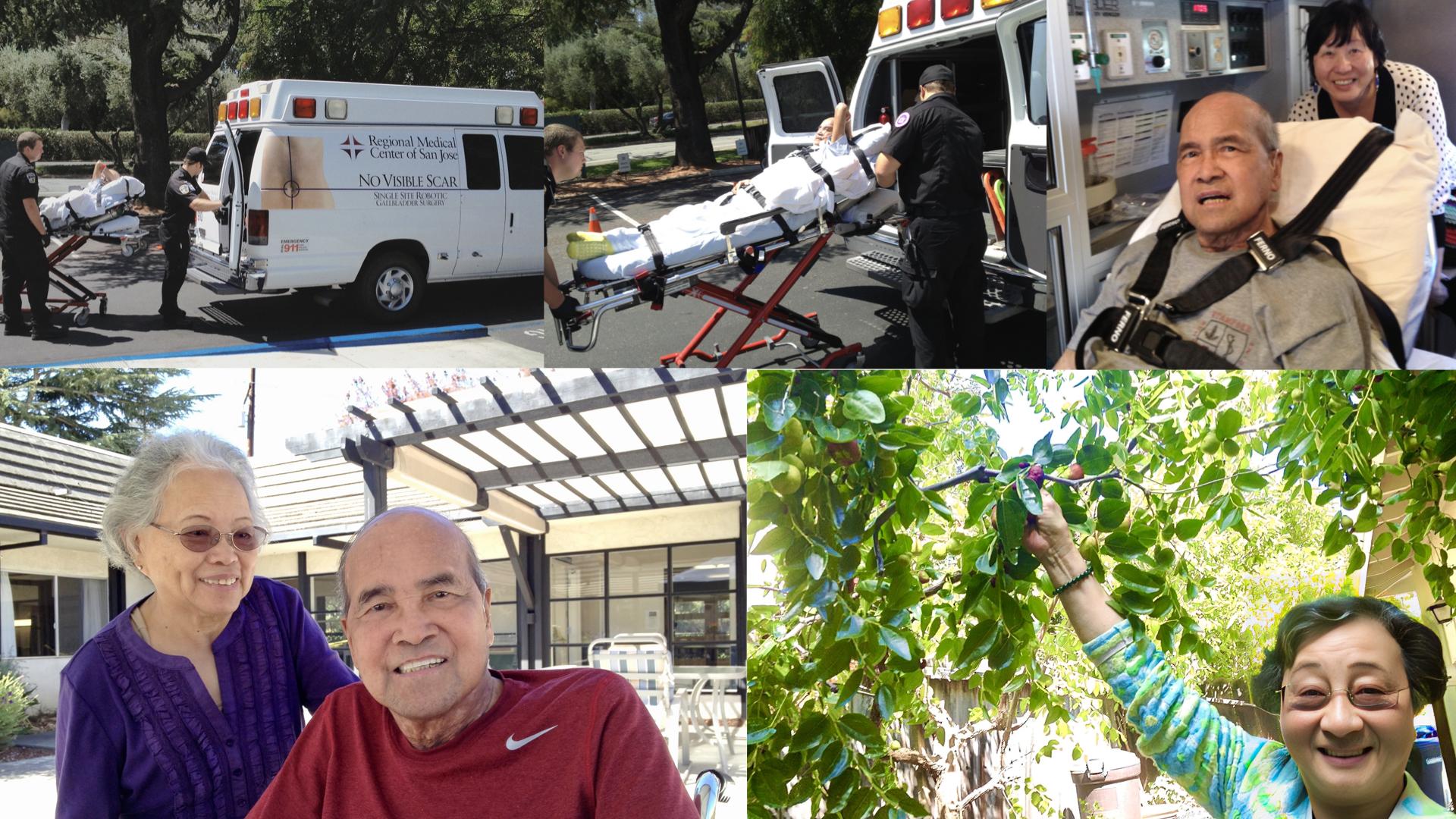
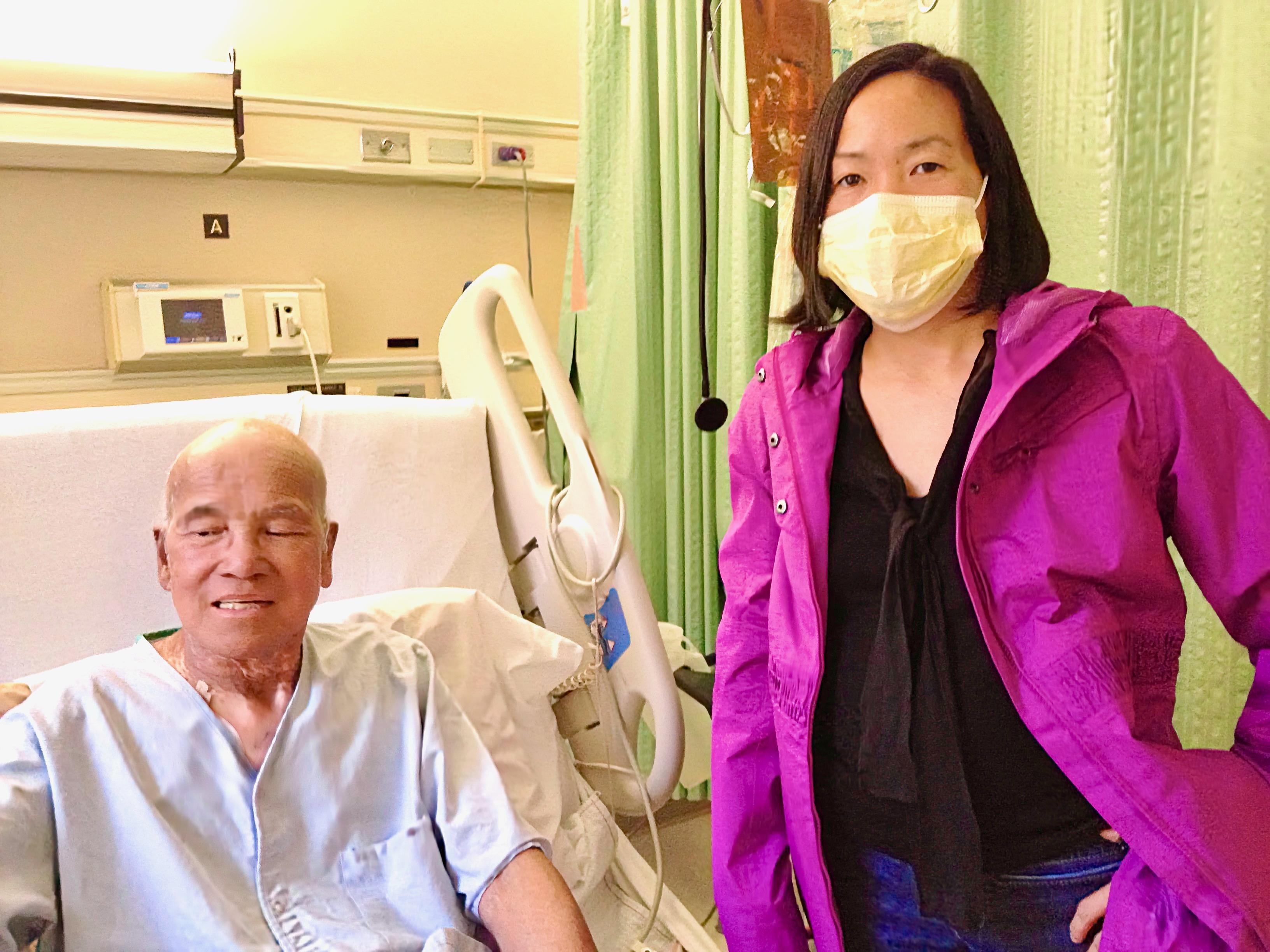
My husband was hospitalized that day at the Stanford Hospital in Palo Alto. Before we left his office, Dr. Peng advised me to pick up some strong topical medication at the pharmacy because, as he predicted, it took some time for my husband to be admitted. My husband since that day four months ago has been under the care of Dr. Peng. His is still a very difficult case, but he is at least 70% better than the day we first saw Dr. Peng. We were finally able to travel and just came back from a visit to Brooklyn, NY to see our three-month old grandson Jonathan.
I wanted to write this post for two reasons. (Many thanks to my husband for allowing me to discuss his health problems.) Firstly, I want to highlight the important role that academic physicians play in the overall health care system. Academic physicians have three primary responsibilities: they do research, they see patients applying that research, and they teach the next generation of doctors. They embody the knowledge and experience of treating the most difficult cases and the sickest patients referred to them by other physicians. They also are the link between research and the practice of medicine, observing firsthand the effect of various treatment on real patients, conducting research on new treatments, and matching up patients with clinical trials. And what could be more important than teaching the next generation of doctors?
Secondly, I want to pay tribute to Dr. David Peng, who was then Associate Professor of Dermatology and Director of the Residency Program. (He is currently President, USC Care Medical Group.) His compassionate care for his patients is well known. We have had many of his colleagues, residents, medical students, and staff tell us (when he is out of the room) what an excellent doctor he is and how fortunate we are to be under his care. He has a high EQ (signifying emotional intelligence), says my daughter, who has plenty of it herself. Dr. Peng has given us his cell phone number and his email so we can reach him when we need to. I keep him posted regularly re my husband’s condition via email replete with photographs. He has answered many questions from my daughter and son about aspects of my husband’s care. He has helped us with insurance issues.
A consummate physician, he remembers from visit to visit subtle changes in my husband’s condition (though weeks may have past since the last visit) and takes biopsies of new eruptions he does not understand. He once told us a story of how he stopped to talk to a perfect stranger about his skin disorder. Shopping with his wife at the mall and holding her packages, he spotted this man. Although his wife shot him several warning looks not to get involved, he finally put the packages down and went to talk to the man.
Academic physicians pay a steep financial price for not being in private practice. Having in the past been talked out of retirement to manage two cardiology groups (one a twenty-physician group and the other a six-physician group) and having an MBA from The Wharton School, I am quite familiar with the financial aspects of medicine. A doctor like Dr. Peng would be foregoing, not a percentage of his income, but many multiples of his income to be in academia.
To Dr. David Peng and all other academic physicians, a heart-felt thank you!









 1
1
 1
1









 Share with others
 Donate in memory
