At the start of the 2012 season, I had been in Atlanta for about a year and was to take on the role of lead trainer for the association. I reached out to Gordon who had been running training for Lou at Atlanta Youth Lacrosse and had been creating videos on lacrosse officiating (we will come back to the videos). I was married, 41, had been teaching for almost 18 years, and officiating for a decade. Little did I know at the time that this kid would teach me more than I could possibly imagine about hope, fortitude, honesty, love, and joy.
Gordon and I bonded immediately. It was like each of us had each found the co-conspirator we had been looking for. We talked for hours about training plans, officiating philosophies, recruiting strategies, pedagogy, pacing, scaffolding lessons, and using new technologies to train new officials for hours and hours. That fall we began created lesson plans, PowerPoints, handouts, and demonstrations. We drove all over Georgia every weekend in the fall to teach 8-hour sessions on how to be an official until we were hoarse and exhausted. For such a young guy he was incredible in a classroom, by far the best teacher I have ever worked with. With that, it was not all sunshine and roses. We were like an old married couple – we annoyed each other terribly, but despite our foibles and frustrations, we couldn’t imagine doing anything else. And every Monday, after those exhausting weekend sessions, driving home from work, one of us would call to share a new idea or tweak to improve our program.
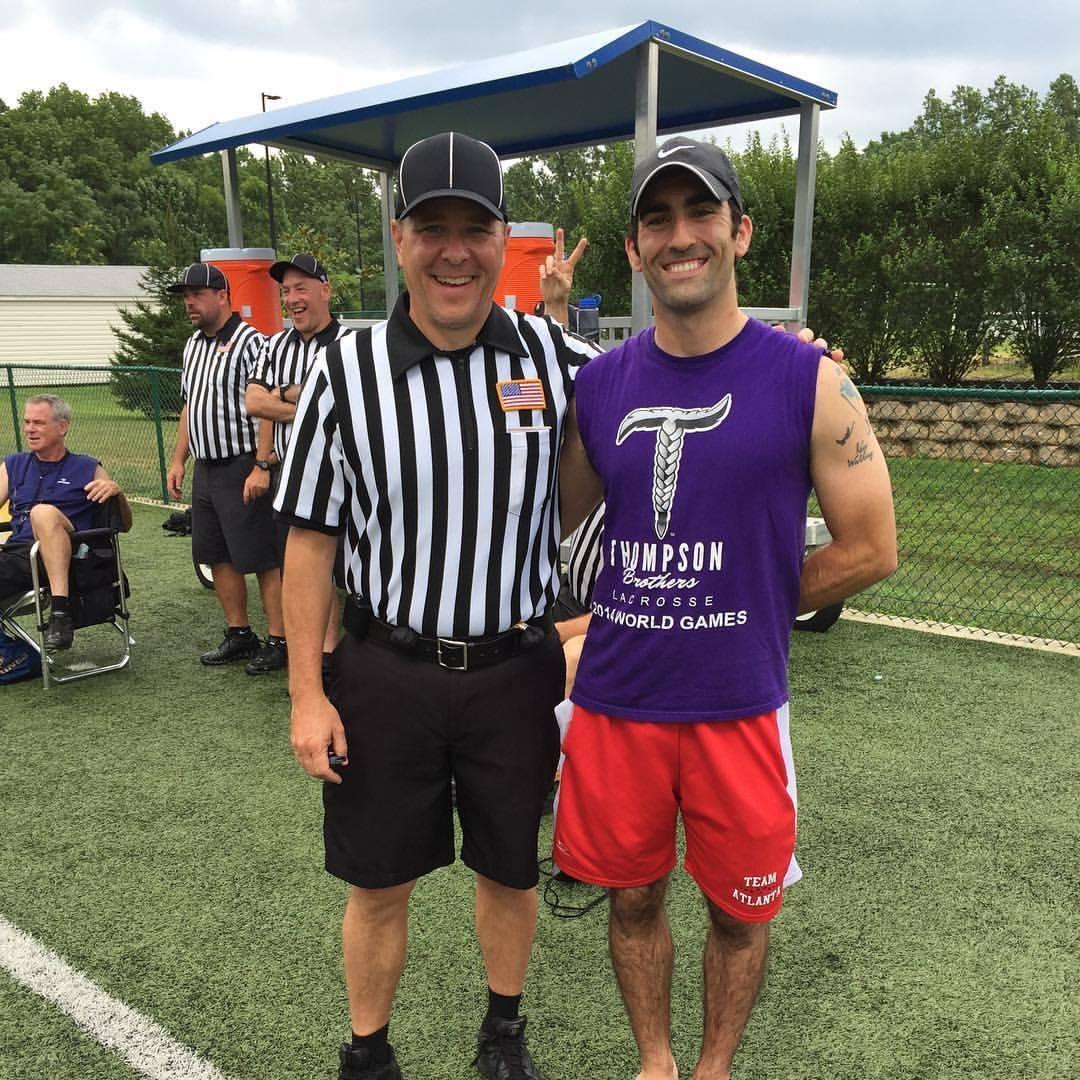
Gordon was a study in contradictions. He was a 22-year old kid, but you knew he was an old soul. He was old school and dressed like a man more than twice his age -- man did he love a dapper vest and a jaunty cap! and yet he also the most technologically savvy person I know. He hadn’t finished college but was as well read and intellectually curious as any of my graduate school peers. He would call me and ask about Baptist theology, the history of psychoanalysis, Egyptian afterlife practices, metaphysics or epistemology. He was open, caring, and welcoming, his smile could light up a room, but he could be as stubborn as an ox if he thought he was right -- just ask him if he thought we should go back to running right or if the unified field was a good idea. He was relentless in pursuit of making it better, getting it right, and finding the answer. And yet at the same time, Gordon one of the most patient souls I have ever met; willing to meet those he worked with where they were at and more than happy to accompany them on their journey at their own pace. He was an athlete, a real stud. His hair had hair. And the tattoos. And yet Gordon was never afraid to be ridiculous. Do we all remember the toe shoe phase? He was a nerd. He loved reading and talking about Sci Fi and Fantasy!
For those of us who were blessed to have worked a game with Gordon, it was a magical experience. He was fast and always in the right spot, so focused, his signals were impeccable. You knew he was doing what he needed to do, and so you made sure you did your job. You could look across the field if you needed help and with just a glance, he let you know what you needed to do. Just being with him made you better. But that was not always the case. Gordon learned to be a better official, he worked at being a better official, he strived to be a better official. And he was as open and honest and public about his journey and his process as anyone I have ever known.
In 2014, Gordon would go on to become the Men’s Game Manager at US Lacrosse. When he left GLOA it was huge blow for us as an organization and for many of us personally. But we knew that he was the guy and this was his moment. He did not just take over a program but exponentially increased both its scope, reach and quality. There is not a men’s official in this country who has not benefited from the work that Gordon did in his time at US Lacrosse. Everyone who interacted with him has a Gordo story; about how he had explained something to them that made them see the game in a way they never had before, or finally understand and a way they could improve their craft or confronted them about an issue they knew they needed to address but were afraid to deal with.
And he shared it all with all of us. I know many of you could tell the same story. Gordon would call you up all excited to tell you about a pregame he did with someone, or how he had listened to a great talk at his last training, or a phrase or mnemonic someone had emailed him or that he had googled from a Jiu-Jitsu or yoga blog. And within days, he would have a post or an article or a webinar in the works to let everyone know about it. We have all laughed at the “How to Fall Down” video. That was quintessential Gordon. He is something I think will make you better and safer, I will now demonstrate the proper technique, even if it looks or sounds goofy. This can help you. I am doing this for you. And while we all busted his chops, every one of us has had that video flash through our minds as we get run over on the field!
But it was not what Gordon had taught us about the game, mechanics, foul recognition, flow of the game, or officiating philosophy. It was the personal connection that resonated. Anyone who interacted with Gordon felt seen; they were not the student or the rookie or they guy that screwed up, they were worthy of being there, of being a part of the discussion, a part of the brotherhood. He made us all feel safe. Safe to fail, to ask questions, to share our hopes and fears. He was kind, and open, and honest with each of us and all he asked in return was that we be those things as well. He showed us that the willingness and determination to succeed were things that we shouldn’t do in isolation, but together. And that it shouldn’t be done in a place of fear and judgement, but one of openness and compassion.
When Gordon went public with his struggle with mental illness, he was nervous. He was not sure how such an intense confession of his personal struggle with his own inner demons would affect his job or his relationships. What I came to realize was that Gordon had already prepared us. He had been sharing with all of us how to have difficult conversations, how to be honest, how to make people feel safe in challenging circumstances, how to carefully choose our words, and engage with people even if we didn’t quite fully understand them, how to find ways to manage, and fix, and adjust, and push through.
Gordon was beautiful and perfect and broken. He wanted more than anyone to make himself right. He worked harder and smarter than anyone I have ever known to find joy and peace in this world. His fierceness, stubbornness, curiosity, honesty, and openness were what allowed Gordon to stay with us for so long. I wish more than anything that I could get the opportunity to teach another class, to take another long drive, to work another game, or to spend just another hour on the phone , but I am so glad for the time I did get because I know how hard he worked to be there with me and for that I will be forever in his debt.


 16
16
 3
3













 Share with others
 Donate in memory
