

Mr. Delbert "Del" Elwood Finup


Events
Memorial service
-
 See 16 RSVPs
- Regina Heiser
- Kim Finup
- Tyler Finup
- Leah Finup
- Eddie & Jill Finup
- Tim Finup
- Amy Larsen
- Britnie Anderson
- Jade Anderson
- Shelbi Finup
-
 Started on Tuesday, November 18, 2025 at 3 p.m.
-
 Speakers: Steven Finup
 -
 Holy Trinity Lutheran Church 8890 Tamarack Road, Lakeview, MI 48850
-
Eulogy — Steven Finup
For those that don't know me, I am Steve Finup, son number 4.
There is a quote from Shakespeare's Hamlet, “He was a man, take him for all in all, I shall not look upon his like again.” This was from Hamlet describing his late father the king, which I think perfectly sums up how I feel about Del.
I expect that most of us have an image in our head of Del as he was these last years since his stroke in 2001, limited mobility, living with persistent pain in his left arm and leg, but still always joyful, humorous, and optimistic. But I also would like to have you remember him as the vibrant, hard charging, bigger than life person which is how I will remember him.
If you read the obituary, you will get a glimpse of his early years in Wisconsin, raised on a dairy farm, high school athlete, served in the Army. After the Army he moved to Reno Nevada to pursue his dream of becoming a pilot. There he met my mother. I was very young, 2 or 3 at the time but I remember meeting Del as... Read more clear as day. He met my brothers Mark, Jon, Tim, and then he looked at me and gave me a “Howdy Pahdnar”, with a sideways wave, which became one of his defining characteristics for me. Del was a huge fan of John Wayne.
He married my mother and moved us to Michigan as he began his crop-dusting career. I remember living in a farmhouse in South Haven and visiting Del at the airport as he was working or flying off to spray gypsy moths or fire ants. Not long after we moved to Bangor. We lived in town and that was where I first went to school. We then moved to Lakeview and lived in a farmhouse north of town on Monroe road. This is where we first bought horses. All of us got our own horse and we would ride them all over the country.
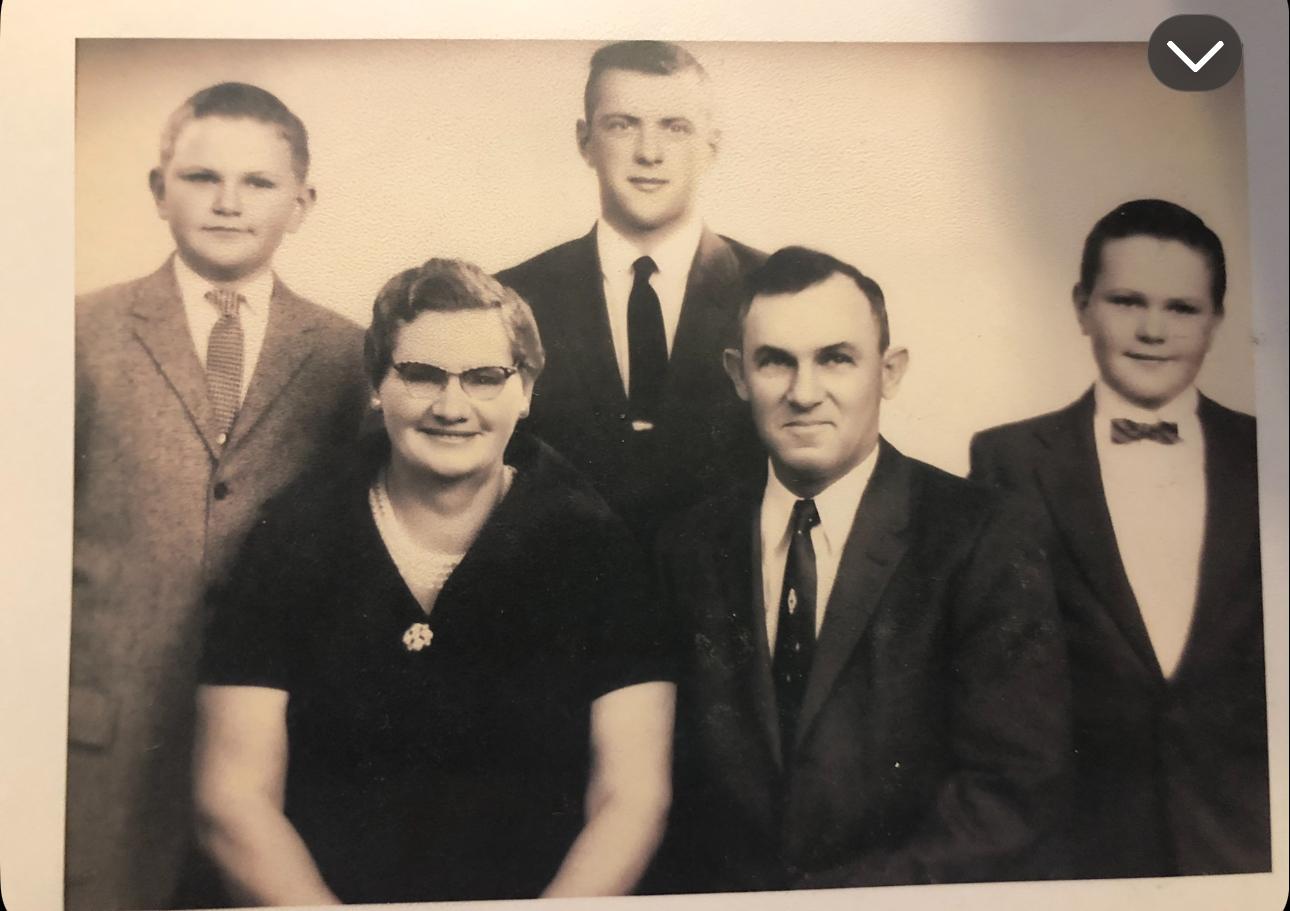
Del and our mother had their hands full with us 4 boys as we were constantly getting into mischief or causing trouble. But what was interesting is that he never attempted to become “Dad” to us, he was just the strong male role model we needed. He was just “Del” which over time came to mean so much more to us than “Dad”. We had a father who was mostly absent, and Del was so much more than that. Del became not just a name but a title. So over the years, as some of the family began calling him “Dad”, us boys always still called him “Del” which how we showed our respect.
He taught us to work hard and about responsibility. Our first responsibility was taking care of our horses. We also got to work around the airport and be exposed to airplanes and flying. I was always the one who washed the belly of the airplanes because I was the smallest. On occasion, Del would take us flying. I remember sitting in his lap, as the airplane, like a fighter plane, only had one seat. He would then fly to a landing strip and I could follow him in working the controls for landing. Then at the end of the day he would fly me back to the airport. Those are great memories.
When our mother passed away, Del bought land north of lakeview where we built a horse farm and started raising and racing quarter horses, which was his other great passion.
After a few years he met Hazel and our family expanded with her kids Mike and Ellie
When each of us started to drive, we worked for him in the summers as airplane loaders, responsible to mix and load the chemicals into the airplane which Del and his pilots would then spray on the farmer’s crops, mostly potatoes. It was a hard job, up before dark, drive to the airport, prepare our trucks and drive to whatever airstrip we were working that day. When I say airstrip, those were typically just some packed down dirt cut out between crops in a field somewhere. We would take a break for lunch and then work until dark, drive back to the airport and prepare for the next days work.
The great thing about working with Del was I had the opportunity to watch him fly. When it came to flying, Del was a master of his art. As Mike Schiffer, a fellow crop duster, said on the memorial site, “He truly was a great stick and rudder pilot, above most of us in his feel for an aircraft.”, which Del would have thought was a great compliment. And I got to witness that. If you have never seen a crop duster work, they fly across a field with the wheels just above the crops, under power lines, spraying the field. At the end of the field they shut off the spray, pull up over any obstacles, turn and then enter the field and do it all over again. This is how they spend their days.
Del always said that as a crop duster, he only got paid for when he was spraying the crop, he did not get paid in the turns. He could turn an airplane like nobody’s business. Tim and I always laughed when we would see crop dusters in Idaho or California who would have these mile long fields and no trees and they would make these huge turns, sometimes lasting minutes at a time. In Michigan it is all small fields with trees around every side, so there were a lot of turns. Del could turn an airplane in 13-15 seconds. And every once in a while, if the conditions were just right, he had a special maneuver where he could turn an airplane in 7 seconds.
One time Del was flying and hit a duck. It completely caved in the leading edge of the wing. Del nursed the airplane back to the airport, did a quick field repair, and then flew the rest of the day. He understood that the farmers were relying on him to spray their fields on time and would make every effort to stay on his schedule. He was so in tune with his airplane that he understood the limitations of the quick repair and never pushed the airplane past that. He then worked into the night making the proper repairs so that he could fly again the next day.
Watching Del fly, and working around his airplanes, is where I got my love for flying. I had a dream of becoming a crop duster. Unfortunately, at that time, it was very difficult to get into the crop dusting business as a new pilot. There were lots of pilots and the cost of insurance was very high. But Del saw that I had a real aptitude with horses and encouraged me to pursue that as a career. He got me a job at a horse ranch in Oklahoma. But I also started getting my pilots license when I was in Oklahoma. When I moved back to Michigan permanently to work on a horse ranch in Grand Rapids, I finished my private pilots training and enrolled in WMU to become a professional pilot.
At one point I visited Del at the airport and he was finishing up for the day and asked me if I wanted to ride along on a rinse load, which is just a load of clear water to rinse out the spray system, which of course I jumped at. Of course being fully grown, it was a squeeze getting us both into an airplane built for one person. I was too big to sit in his lap anymore. I ended up sitting on the roll cage by the window and holding onto the bars above Del’s head to keep myself steady. Del made a pass along the field rinsing the system, then under the power line at the end, and pulled straight up. I watched the airspeed indicator drop from 140 knots to 0. He cranked around in a hammerhead turn, back around under the wire and across the field again. Under the wire at the other end he started doing some more very tight turns and wing overs so that at times I was looking up at the ground about 300 feet above my head. I was just enjoying myself watching him work the controls. We flew back to the airport and Del was just laughing. I got out of the airplane and asked him what he was laughing at. He told me were were pulling about 4 g’s in those turns and said “you should have heard yourself grunt in those turns.” Pulling g's did not affect him at all.
But it was still very difficult to break into crop dusting and my future looked like either airlines or corporate flying. After having the opportunity to do a couple of corporate flights I discovered that to be very, very, very boring. What Del described later as “hours of boredom and seconds of terror”. I really wanted the exciting flying I had witnessed growing up. So I switched to engineering and spent my career designing airplanes rather than flying them. About 10 years later it became much easier to break into crop dusting and Mike had the opportunity to work for Del as a pilot. And, Oh, I was very jealous of that.
Del always kept himself in top physical condition. At one point his fellow pilots nicknamed him “Jack Lalane” as he was always doing some sort of exercise. Hazel told me a story of them walking along the strip in Las Vegas and they passed two kids and one of them said, “Whoa, it’s Chuck Norris”, which Del thought was very funny.
Then in 2001 he had his stroke and everything changed. He lost his business, his horses, and his house. He had had to learn the basics of walking and doing simple things all over again. He had persistent pain that he rarely complained about. He was frustrated that he could not do things to the level he was used to. My wife Kim and I would visit and Kim and Hazel would jump in the car and go shopping. Not just shopping, but powerhouse shopping, driving all over the state. Del and I would sit and talk about people, horses, politics, and I would try to get him to talk about flying. And he had some great memories of flying. He had gotten rated in Learjets. He had trained to fly helicopters. He told me about flying aerobatics, flying figure eights around a point and other maneuvers. About the time someone took a shot at him and put a hole in his wing when he was flying over. About meeting the first Chinese agriculture delegation to the US when they came to watch him spray. He had once flown a corsair (which is a WWII fighter plane that pilots dream of flying). He told me about times he had scared the crap out of himself, usually flying cross country and getting socked in by weather and having to land someplace sketchy and ride the storm out, then figure out how to take off out of some field or road.
Even with his limited mobility, he still lived his life in the best way he could, with humor and optimism. Always staying connected with his ever increasing family, friends, and colleagues through phone calls. Always a continuing example to us all. It is easy to remember him sitting in that chair that way, but I would also have you remember him as the bigger than life person that I remember. Read lessFor those that don't know me, I am Steve Finup, son number 4.
There is a quote from Shakespeare's Hamlet, “He was a man, take him for all in all, I shall not look upon his like again.” This was from Hamlet describing his late father the king, which I think perfectly sums up how I feel about Del.
I expect that most of us have an image in our head of Del as he was these last years since his stroke in 2001, limited mobility, living with persistent pain in his left arm and leg, but still always... Read more joyful, humorous, and optimistic. But I also would like to have you remember him as the vibrant, hard charging, bigger than life person which is how I will remember him.
If you read the obituary, you will get a glimpse of his early years in Wisconsin, raised on a dairy farm, high school athlete, served in the Army. After the Army he moved to Reno Nevada to pursue his dream of becoming a pilot. There he met my mother. I was very young, 2 or 3 at the time but I remember meeting Del as clear as day. He met my brothers Mark, Jon, Tim, and then he looked at me and gave me a “Howdy Pahdnar”, with a sideways wave, which became one of his defining characteristics for me. Del was a huge fan of John Wayne.
He married my mother and moved us to Michigan as he began his crop-dusting career. I remember living in a farmhouse in South Haven and visiting Del at the airport as he was working or flying off to spray gypsy moths or fire ants. Not long after we moved to Bangor. We lived in town and that was where I first went to school. We then moved to Lakeview and lived in a farmhouse north of town on Monroe road. This is where we first bought horses. All of us got our own horse and we would ride them all over the country.
Del and our mother had their hands full with us 4 boys as we were constantly getting into mischief or causing trouble. But what was interesting is that he never attempted to become “Dad” to us, he was just the strong male role model we needed. He was just “Del” which over time came to mean so much more to us than “Dad”. We had a father who was mostly absent, and Del was so much more than that. Del became not just a name but a title. So over the years, as some of the family began calling him “Dad”, us boys always still called him “Del” which how we showed our respect.
He taught us to work hard and about responsibility. Our first responsibility was taking care of our horses. We also got to work around the airport and be exposed to airplanes and flying. I was always the one who washed the belly of the airplanes because I was the smallest. On occasion, Del would take us flying. I remember sitting in his lap, as the airplane, like a fighter plane, only had one seat. He would then fly to a landing strip and I could follow him in working the controls for landing. Then at the end of the day he would fly me back to the airport. Those are great memories.
When our mother passed away, Del bought land north of lakeview where we built a horse farm and started raising and racing quarter horses, which was his other great passion.
After a few years he met Hazel and our family expanded with her kids Mike and Ellie
When each of us started to drive, we worked for him in the summers as airplane loaders, responsible to mix and load the chemicals into the airplane which Del and his pilots would then spray on the farmer’s crops, mostly potatoes. It was a hard job, up before dark, drive to the airport, prepare our trucks and drive to whatever airstrip we were working that day. When I say airstrip, those were typically just some packed down dirt cut out between crops in a field somewhere. We would take a break for lunch and then work until dark, drive back to the airport and prepare for the next days work.
The great thing about working with Del was I had the opportunity to watch him fly. When it came to flying, Del was a master of his art. As Mike Schiffer, a fellow crop duster, said on the memorial site, “He truly was a great stick and rudder pilot, above most of us in his feel for an aircraft.”, which Del would have thought was a great compliment. And I got to witness that. If you have never seen a crop duster work, they fly across a field with the wheels just above the crops, under power lines, spraying the field. At the end of the field they shut off the spray, pull up over any obstacles, turn and then enter the field and do it all over again. This is how they spend their days.
Del always said that as a crop duster, he only got paid for when he was spraying the crop, he did not get paid in the turns. He could turn an airplane like nobody’s business. Tim and I always laughed when we would see crop dusters in Idaho or California who would have these mile long fields and no trees and they would make these huge turns, sometimes lasting minutes at a time. In Michigan it is all small fields with trees around every side, so there were a lot of turns. Del could turn an airplane in 13-15 seconds. And every once in a while, if the conditions were just right, he had a special maneuver where he could turn an airplane in 7 seconds.
One time Del was flying and hit a duck. It completely caved in the leading edge of the wing. Del nursed the airplane back to the airport, did a quick field repair, and then flew the rest of the day. He understood that the farmers were relying on him to spray their fields on time and would make every effort to stay on his schedule. He was so in tune with his airplane that he understood the limitations of the quick repair and never pushed the airplane past that. He then worked into the night making the proper repairs so that he could fly again the next day.
Watching Del fly, and working around his airplanes, is where I got my love for flying. I had a dream of becoming a crop duster. Unfortunately, at that time, it was very difficult to get into the crop dusting business as a new pilot. There were lots of pilots and the cost of insurance was very high. But Del saw that I had a real aptitude with horses and encouraged me to pursue that as a career. He got me a job at a horse ranch in Oklahoma. But I also started getting my pilots license when I was in Oklahoma. When I moved back to Michigan permanently to work on a horse ranch in Grand Rapids, I finished my private pilots training and enrolled in WMU to become a professional pilot.
At one point I visited Del at the airport and he was finishing up for the day and asked me if I wanted to ride along on a rinse load, which is just a load of clear water to rinse out the spray system, which of course I jumped at. Of course being fully grown, it was a squeeze getting us both into an airplane built for one person. I was too big to sit in his lap anymore. I ended up sitting on the roll cage by the window and holding onto the bars above Del’s head to keep myself steady. Del made a pass along the field rinsing the system, then under the power line at the end, and pulled straight up. I watched the airspeed indicator drop from 140 knots to 0. He cranked around in a hammerhead turn, back around under the wire and across the field again. Under the wire at the other end he started doing some more very tight turns and wing overs so that at times I was looking up at the ground about 300 feet above my head. I was just enjoying myself watching him work the controls. We flew back to the airport and Del was just laughing. I got out of the airplane and asked him what he was laughing at. He told me were were pulling about 4 g’s in those turns and said “you should have heard yourself grunt in those turns.” Pulling g's did not affect him at all.
But it was still very difficult to break into crop dusting and my future looked like either airlines or corporate flying. After having the opportunity to do a couple of corporate flights I discovered that to be very, very, very boring. What Del described later as “hours of boredom and seconds of terror”. I really wanted the exciting flying I had witnessed growing up. So I switched to engineering and spent my career designing airplanes rather than flying them. About 10 years later it became much easier to break into crop dusting and Mike had the opportunity to work for Del as a pilot. And, Oh, I was very jealous of that.
Del always kept himself in top physical condition. At one point his fellow pilots nicknamed him “Jack Lalane” as he was always doing some sort of exercise. Hazel told me a story of them walking along the strip in Las Vegas and they passed two kids and one of them said, “Whoa, it’s Chuck Norris”, which Del thought was very funny.
Then in 2001 he had his stroke and everything changed. He lost his business, his horses, and his house. He had had to learn the basics of walking and doing simple things all over again. He had persistent pain that he rarely complained about. He was frustrated that he could not do things to the level he was used to. My wife Kim and I would visit and Kim and Hazel would jump in the car and go shopping. Not just shopping, but powerhouse shopping, driving all over the state. Del and I would sit and talk about people, horses, politics, and I would try to get him to talk about flying. And he had some great memories of flying. He had gotten rated in Learjets. He had trained to fly helicopters. He told me about flying aerobatics, flying figure eights around a point and other maneuvers. About the time someone took a shot at him and put a hole in his wing when he was flying over. About meeting the first Chinese agriculture delegation to the US when they came to watch him spray. He had once flown a corsair (which is a WWII fighter plane that pilots dream of flying). He told me about times he had scared the crap out of himself, usually flying cross country and getting socked in by weather and having to land someplace sketchy and ride the storm out, then figure out how to take off out of some field or road.
Even with his limited mobility, he still lived his life in the best way he could, with humor and optimism. Always staying connected with his ever increasing family, friends, and colleagues through phone calls. Always a continuing example to us all. It is easy to remember him sitting in that chair that way, but I would also have you remember him as the bigger than life person that I remember. Read less
Get notified of changes

In lieu of flowers
Recent contributions

Recent contributions


In lieu of flowers
Recent contributions
Recent contributions
Share this memorial website


 Share with others
 Donate in memory

Comments & questions