

Cynthia Sullivan-Mailman


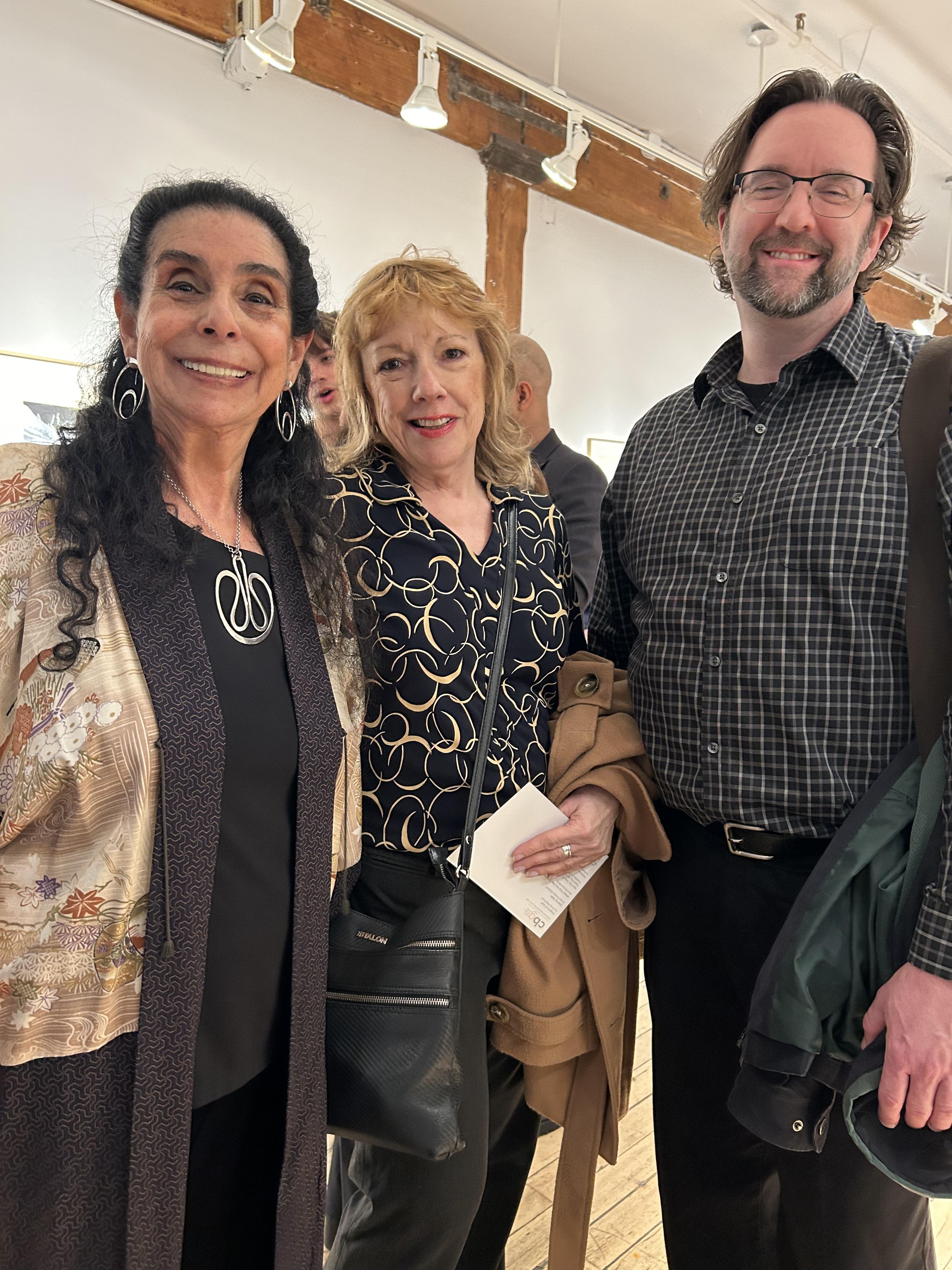
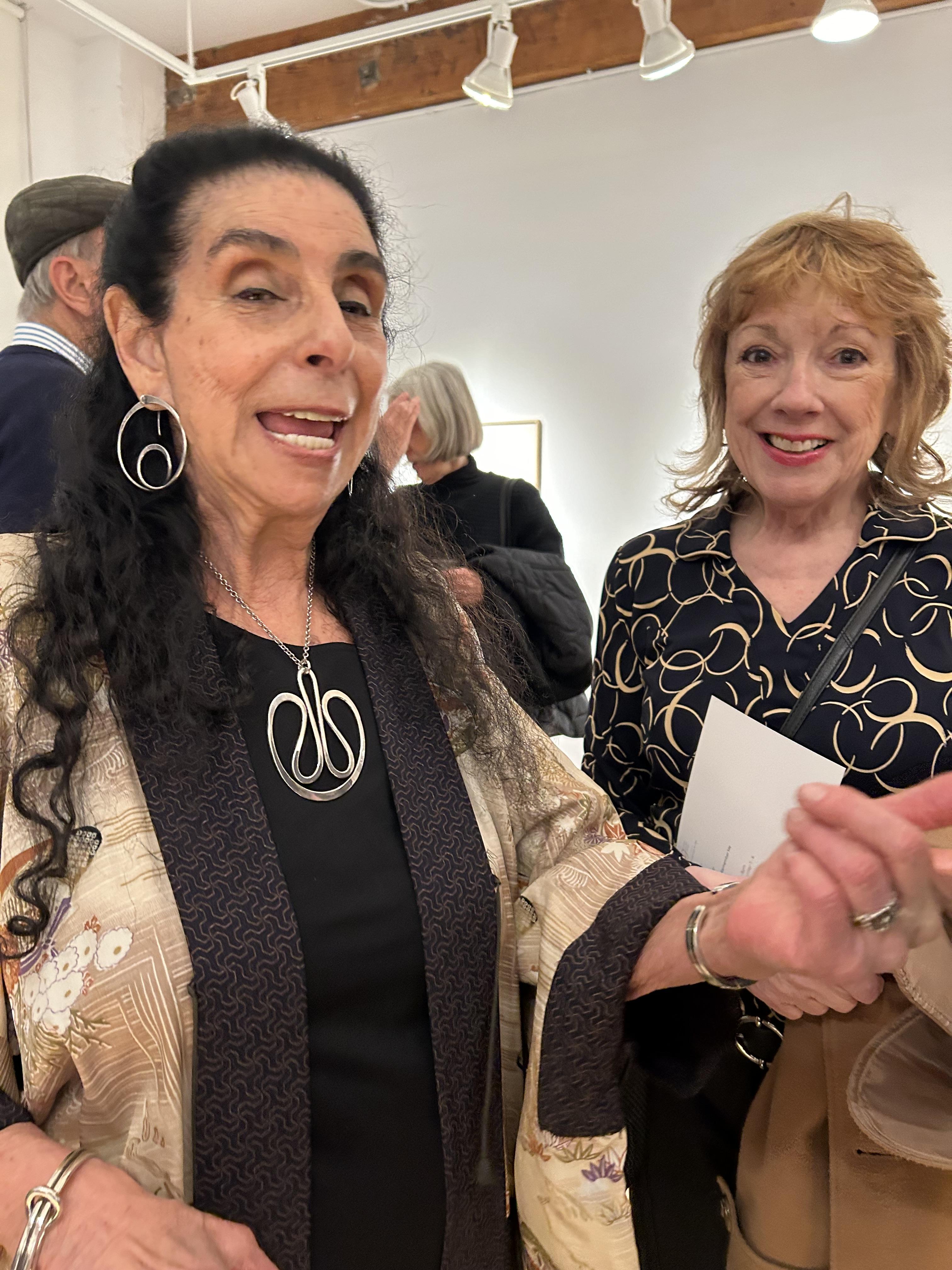
 Photo
Photo
Cynthia's obituary
Cynthia -Sullivan-Mailman, a noted artist, activist, educator and community organizer, passed away at age 82.
Born in the Bronx to Julius Mailman and Clara Russler Mailman, Russian Jewish immigrants, Cynthia moved to Staten Island with her husband, Silver Sullivan in the early 1970's. She led a full and colorful life, encompassing the fields of feminist art, civil rights and historic preservation. In Staten Island, she was a founding member of the Richmond Art Collective and its Sports Club, a founder and a longtime President of the Mud Lane Society and a tireless community activist and organizer. She served on the acquisitions committee of Jacques Marchais Museum of Tibetan Art and was active in the ArtLab of Staten Island. Cynthia's paintings have been exhibited in and are in the permanent collection of the Staten Island Museum at Snug Harbor, the Everson Museum in Syracuse, New York and at the Zimmerli Art Museum at Rutger's University.
Attracted to the arts at a young age, Cynthia traveled to Manhattan to take summer classes at the Arts Students League starting at age ten. She originally wanted to be a dancer, but bad knees drove her in another direction. She studied art at the School of Industrial Arts, later known as the High School of Art and Design, and went on to obtain a B.S in Art at the Pratt Institute in Brooklyn, New York. There, while working as a coordinator of night classes, she met the love of her life, Silver Sullivan, a fellow student. She and Silver moved to the Bay Area while Silver pursued his Masters in Mechanical Engineering at Stanford and Cynthia supported the couple working as an art teacher there for time a time. When Silver finished his degree, the couple moved back to N.Y.
Her academic pursuits in the art world culminated with a Master of Fine Arts degree, which she earned from the Mason Gross school at Rutger’s University in New Brunswick, New Jersey in 1978. During her fellowship there, she taught at Livingston College of Rutgers. Sullivan-Mailman also taught visual arts in the New York City Public School system and as an adjunct at Queensborough Community College, City University of New York. Through the federal public arts program of CETA (Comprehensive Employment and Training Act) she produced Commuter Landscape, a 54-foot mural which depicted a commuter’s view of the Pulaski highway. This iconic mural graced the PATH subway station at the World Trade Center in New York City, and greeted millions of commuters until it was destroyed by terrorists in the 1993 World Trade Center bombing.
Prior to concentrating on painting, Cynthia took theater arts classes both at Pratt Institute and at the Actors Studio and was active in the experimental theater and folk music scene, fully engaging in the Bohemian and then Hippie lifestyles. During this time, she met and socialized with emerging legends such as Paul Newman, Bob Dylan and a young Dustin Hoffman. She appeared in the early plays of LeRoi Jones ( Amiri Baraka). She recalled a seminal role in the Le Roi Jones play, the “Toilet” before it went off Broadway. Cynthia ended her acting career early when she refused to pose naked for a scene. She felt that it was gratuitous nudity which did not serve the work. Well before the “#Me too” movement, Cynthia deflected the unwanted sexual advances of powerful men in the arts and in theater.
Cynthia melded woman’s rights with artistic vision. She was a founding member of SOHO20, a seminal woman’s run art gallery and cooperative in Chelsea. She belonged to the first group of feminist artists, women who fought for the equal representation of women in the art world. SOHO20 was only the second woman’s run gallery in N.Y. Always a hustler, Cynthia took an active role in promoting and marketing her work. At the same time, she also encouraged other woman artists to exhibit their work and had an eye for spotting the talent of others.
She also participated in the Sister Chapel, producing a towering nude which subverts the traditional male concept of the divine . Her contribution to the Sister Chapel is on permanent display at Rowan University’s art gallery.
Community activism and standing up for civil and woman’s rights were central themes in Cynthia’s life. She was a member of CORE, the Council for Racial Equality, and marched with Dr. Martin Luther King Jr. in the March on Washington for Jobs and Freedom. She was arrested for her activism multiple times. When the World’s Fair came to New York, she picketed it with a sign stating “: We don’t want a World’s Fair, we want a Fair World”.
After moving to Staten Island with her husband, Silver, she became a leading voice in local preservation and environmental activism and was active in the local art scene. She founded the Richmond Art collective and its Sports Club and was active in the ArtLab and Snug Harbor Cultural Center.
As President of the Mud Lane Society, she was crucial in establishing the St. Paul’s Historic District which preserves the historic architecture of Stapleton. She was instrumental in protecting Stapleton as a residential neighborhood and used her considerable organizational and activist skills to do so multiple times. In 1973, along with others, she stopped the Columbia Sugar Refinery from moving to the Stapleton Pier. Most importantly, in the 1980’s, she spearheaded the "No Coal " movement and was instrumental in mustering community opposition to plans that woud’ve established a coal slurry pipeline and coal refinery in Staten Island. This proposed pipeline would have traversed the length of Staten Island from New Jersey to the Stapleton pier and have exposed Island residents to aerosolized coal dust and numerous other hazardous pollutants.
In 1995, she similarly successfully opposed proposals to establish Formula One and NASCAR racetracks on the Stapleton waterfront. These proposals would have disrupted the residential and historic nature of Stapleton and would’ve caused unwanted traffic, noise and pollution .
In contradistinction to these proposals, in the early 2000’s Cynthia supported the development of Stapleton Studios, partnering with actor Danny Aiello and Harbour Entertainment to help transform the Navy Pier into a movie studio hub. While that proposal was successfully passed, financing eventually cratered and the studios were not built.
Cynthia Mailman was also known for her love of nature and community life. An avid birdwatcher, Cynthia actively participated in the annual Christmas bird count on Staten Island. An animal lover, she loved to snorkel Carribean reefs.
She and Silver took vacations to "follow the reef". Cynthia also adopted and fed numerous stray cats welcoming them into her backyard and home.
She was an active member of Staten Island’s Temple Emanuel and a proud member of its choir, singing during the High Holiday services. Cynthia was a staunch supporter of Israel and forcefully stood up to antisemitism as a founding member of Staten Islander’s Against Antisemitism.
While Cynthia did not have children of her own, after the death of her sister, Pamela Mailman-Rosen in 2010, she and Silver co-parented her nephew, Julian Rosen, with her brother-in-law, Philip Rosen, DMD.
Cynthia is survived by her husband and partner Silver Sullivan, her brother-in-law, Philip Rosen, her nephew Julian Rosen and by a large community of friends and artists. She will be remembered as a fierce advocate for women’s and civil rights as well as for her work in historic preservation and as a pioneer in feminist art.
This obituary was written for Cynthia by Deborah Josefson at her request and based is based upon interviews with her prior to her death along with a personal association of over 25 years.
Copyright 12/25. D. Josefson
 Send to someone
Want to stay updated?

Send flowers


Send flowers
Share this memorial website


 Share with others
