

We will send an invite after you submit!
In memory of
Yati Ghazalli
November 24, 1942 - April 8, 2018
Nov 24, 1942 - Apr 8, 2018


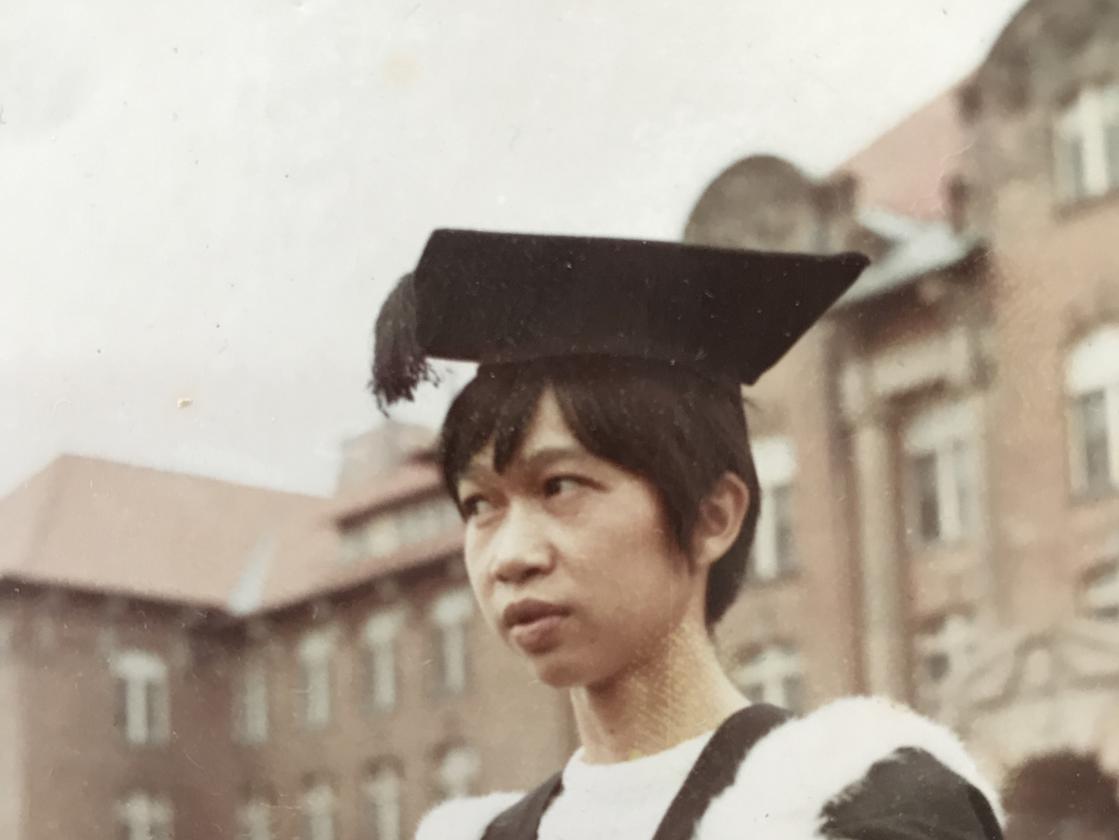


 Photo
Photo
Yati's obituary
Our mom passed away at 10:30pm on Sunday, April 8, 2018. She died peacefully in her sleep in a nursing home in Lowell, MA after losing a slow battle with a debilitating disease. My sister and I emptied her room in half an hour and fit the last of her worldly possessions into just five garbage bags. We chose not to host any service because our mother would not have liked to be on display nor did we want to deal with empty platitudes or the outdated ceremonies of death. But five garbage bags and a death certificate are not the sum of our mother’s life. Instead, we decided to write her story; an abbreviated version of her interesting life and a testament to her toughness and tenacity; something that our kids will hopefully one day read when they look up their grandmother’s story.
Afiati Ghazalli was born Bik Tan in Semarang, Java in Indonesia in 1942 to Sian Swie Tan (Swie) and Tien Nio Tan (Tina). Swie was a lawyer, Tina was a beautiful liberated woman of the times. She loved to drive her British automobile by herself, which we presume was pretty scandalous at the time. They had four children in total, our mother was the second born. We don’t really have a lot of information or clarity about our mom’s childhood or her family, but from what we’ve pieced together from stories and old photos, it seems like she had a happy childhood in the highlands of Semarang. The family had a city house in Semarang; a gorgeous structure on stilts with an interior courtyard (my sister remembers visiting once). But the family loved spending time at their mountain house in Tamangmangan, named Casa Tina after the family matriarch who loved it so much there. As was custom at the time for families with means, all of the children were sent away to boarding school and university in Europe. Our mom left home for St. Margaret’s boarding school in Singapore at the tender age of 13. She went on to international school in Geneva, Switzerland and Bedford College in London, and never went home to Indonesia. She remained quite close with her older sister, but over time lost touch with her younger siblings.
Our mother was known as Bik by close friends and family, and as Yati by new friends at this time. She was an undergraduate student in London in the early 60s, right around the same time that Mick Jagger was an undergraduate at LSE. We’d like to imagine that she was carefree and adventurous during those days. She once told me about a handsome Greek student she dated briefly, and about a summer spent on a friend’s family boat, passing through the Straits of Gibraltar and sailing all the way to Sfax. We’d like to think she maybe smoked a few cigarettes or joints too along the way.
Once she completed her undergraduate studies in Biology at Bedford College, Yati moved across the pond to continue her graduate studies at McGill University in Montreal, Canada where she met a young Malaysian freshman student studying agricultural science who was struggling with botany. She ended up tutoring him, and eventually they fell in love. They decided to get married in 1968, but since Quebec was a very Catholic province and only recognized church marriages, they elected to have a civil ceremony in Martha’s Vineyard. Their witness was a friend named Stanley who lent our father his ring to place on our mother’s hand since they were too poor at the time to buy their own. The plan was for them to have an Islamic wedding at a later date. The story gets a bit fuzzy there because we don’t really have any photos of that time in their lives. My mother rarely talked about it. And we didn’t really speak with our father for many years. All we have are a few old slides and our Swiss uncle’s stories.
But for the sake of the narrative thread here, we’d like to think that these were the golden years of their marriage. They were two kindred spirits from similar places thrown together in a completely different part of the world, studying science and making a new life together. Eventually, they moved back to Malaysia where my sister Yani, their first daughter was born. Then they moved to Holland for a while where they raised their toddler daughter, before landing in Columbus, Ohio at Ohio State University where their second daughter was born. That’s me, Haily.
Since Yati’s departure from Java, successive tragedies had struck in Indonesia. As the country established its independence from Holland, educated and well-to-do Indonesians who were considered to be Dutch sympathizers and possible future political agitators were arrested and jailed. Our grandfather, a lawyer, was arrested and later died in prison of a heart attack. Tina survived for several more years, but shortly after I was born and right before making the trip to introduce her mother to me, Tina was killed in a car accident. Then, while his three sisters were abroad, our mom’s brother Jongkie - the dark sheep of the family - liquidated the family’s considerable assets and disappeared. Rumor has it that he owed someone a huge gambling debt and probably did it to save his own skin. By then our mother’s elder sister lived in Switzerland with her husband and her younger sister had married and moved to Chile with her husband. Needless to say, at this point, our mother realized that she could never go home. Home would be wherever her small family was.
Eventually, our father completed his doctorate with her continued help and tutoring, and our family moved back to Malaysia. He took a job in government, possibly in the Ministry of Agriculture. Our mother concentrated on raising us. Our childhood memories were mostly happy; road trips to the highlands or to the coast, adventures in Kuala Lumpur, learning how to swim at our golf club, making friends with expat families. But, these were complicated times for my mother. She did not fit the mold of a dutiful, Muslim wife. She could be surly in social situations, she was tall, she wore her hair short, she was smart, and frankly she was entirely too Westernized. Traits that would make her admirable or eccentric by modern standards made her somewhat of a pariah at that time and in that place. Eventually she started teaching at Fairview Elementary, where my sister and I were students.
Our parents never did hold that Islamic wedding ceremony. Decades later, we would find out that the entire time that we lived in Malaysia, their American civil marriage was not technically recognized by the government (for which our father worked). In theory, my sister and I were bastards that entire time, which explains a lot about those days. It was not an easy time for my mother, but she was proud and persevered to make the best of a less than ideal situation.
There were not a lot of educational choices in Kuala Lumpur in the 1980s, so when Yani was approaching middle school age, our mother decided to start an English language school with a friend. It was initially meant simply to be a school where their kids could be prepared for upper studies in Europe and the United States, but there were many other families who faced the same challenge and sought a quality education for their kids. Soon the school grew and they moved from a temporary spot in a shopping center into new buildings. Gradually enrollment soared and the school expanded to become one of Kuala Lumpur’s established private educational institutions. ELC still exists today. And as a result, our mom has a wikipedia page. We think that’s pretty cool.
Unfortunately, just as our mother discovered her calling as an educator and her professional life was blossoming, her relationship with our father was withering. She found out that he was having an affair and the 18 year marriage quickly unraveled. Unwilling to stay in a country where being a non-Muslim felt like a fatal disability, our mother decided to leave everything that she had known and built over the last two decades behind. With her eldest daughter already studying abroad, she just needed to leave with me. However, since Malaysia is a Muslim country, where by law a man could make any and all decisions about his progeny regardless of the mother’s wishes, she had to make it out of the country without my father’s knowledge lest he decide he wanted to keep his daughter. Ultimately, he did not. That was in 1988 and that was the last time any of us set foot in Malaysia.
Now as adults, this is where my sister and I can really see how difficult this time in our mother’s life must have been. She had sacrificed her studies in order to raise her children and help her husband further his career. Just as she was building a life for herself in Malaysia, her marriage ends in ignominious fashion, and she finds herself alone in a foreign country living on the charity of her sister’s husband’s family with two young children. She was heartbroken, destitute, and uncertain.
But somehow, our mom led our family of three through this time with her strength and dogged determination. She knew we couldn’t stay in Switzerland forever. She knew she needed to raise her daughters somewhere where they would be free to be independent young women. After several years of living in utter limbo and in the very knick of time before her visa ran out, Yati managed to get a job at the University of Notre Dame in South Bend, Indiana.
She moved the family to the Midwest and continued on her path as an educator, teaching pre-med students at the University of Notre Dame. It was a bit of a cultural shock for all of us, but life had changed so much in so little time that we simply adapted. Somehow our mother found time to obtain a Masters Degree in education from Indiana University at South Bend (IUSB), and eventually she got her green card. She also obtained an official divorce from my father, in absentia, closing that chapter of her life definitively. Since non-tenured professors and teaching staff did not make a lot of money, she taught night courses at the community college and later took a second job at night loading boxes at a local Mejiers to make ends meet. Her back was never quite the same.
By this point, both her daughters went off to college on scholarships and our mother was able to make the next big change in her life. In 1996, she packed up her Toyota Tercel, quit her job at Notre Dame, and headed West to California. She first got a job teaching high school in Palmdale, before settling into a new life teaching the International Baccalaureate program at a public high school in West Covina, CA. For almost ten years, she taught high school students preparing them for university, returning to what she had started doing back at ELC in Kuala Lumpur. Our mother excelled and found a purpose in teaching. She thrived on feeling needed, feeling like she was shaping her students’ minds, and seeing them off on their educational journeys with the appropriate knowledge and tools. What she might have lacked in patience at home with us, she gave without reserve to her students. “Mrs. G” was a beloved teacher among students who appreciated her tough love, no nonsense approach.
She retired from teaching in 2007 with a plan to join the Peace Corps. Unfortunately, after only eight weeks of pre-service training in Kenya, she returned to Los Angeles. Now in retrospect, we think that perhaps the Peace Corps administrators noticed some things that made them believe that she would not make the best candidate for a four year stay in rural Kenya. Perhaps early signs of something that we would not see for several more years.
The rejection broke her. In the years that followed, she struggled to figure out what to do with her golden years. She traveled to Panama and spent three months on a language course to see if she could see herself living in an expat community in the mountains of Panama. She could not. She moved back to South Bend for a short time to stay with an old friend, and then back to California before we bought her a small condo in Palm Springs. Our hope was that she would find peace and happiness in the desert.
But genetics would ultimately make the decision for her. As the blood vessels in her brain calcified and hardened, our mother’s incredible strength and personality started to disappear. She was so intelligent that at first the signs were hard to see. Medical professionals told me that I was imagining these signs, but we knew. The disease progressed quickly and stole away everything that made her special, and so complicated and difficult at times. She ended up spending her golden years trapped in her mind. The nurses at the hospital where she spent the last four years of her life, many of whom were Kenyan, used to call her Afi. In the end, she was simple, but at least she was peaceful.
This might seem like a sad story, but it’s not. Our mother was an incredible person and the sum of her life is so much more than five garbage bags and a death certificate. Her narrative thread is long and convoluted, but complex and colorful. By the time it came to its natural end on April 8th, the thread became the fabric of beautiful story, not a sad one.
It’s the story of a brave young woman who left her home at the age of 13 and never looked back, living in almost ten different countries and speaking seven languages including Dutch, two Javanese dialects, German, Switzerdeutsch (which everyone would agree is a different language from German), French, and Spanish. She also could make due in Portuguese. It’s the story of a single mother who made damned sure that her daughters understood the importance of education and independence. It’s the story of a proud immigrant who deeply appreciated the freedom and independence that the United States afforded her, giving her a new life after several years of unforgiving limbo in Europe. It’s the story of a jilted woman whose trust was broken once and never let herself be subjected to that kind of pain again. She traded strength for loneliness, but she found safety in solitude.
She was human and fallible. Like all parents, she embarrassed the hell out of her daughters at times. She could be incredibly stubborn and dogmatic and so incredibly frustrating. Like all kids, my sister and I wished we had a “normal” mother who was a bit softer around the edges, but she was always supportive in her own way, and always proud of us even if she told us only sparingly. She had a megawatt smile when she chose to shine it on the world and could be very goofy.
Looking back at old photos, we realize that she probably never told us about her memories because it was too painful to remember them. Instead, she packed it all away and gradually excised people and relationships from her life. She became hard-edged pragmatist with no patience for frills and fancy. She was kind and good even if she had trouble expressing her emotions. She was especially fond of dogs since they were much easier to trust than humans and she liked to laugh. Whatever her faults were, she will always be the strongest woman in our lives, and our one and only mother.
Because of her experience with our father, we grew up with a healthy distrust of all formal religions. We don’t believe in God, but we do believe in the universe and fate. Our mom got married in Martha’s Vineyard in 1968 and died 50 years later in Lowell, Massachusetts, ending her story full circle. My sister and I would like to think that our mother is finally free of her ailing body and mind and that she’s rejoined her family, forever those joyful early years in Indonesia. Or maybe she’s romping with her German Shepherd Murphy, eating French cheese without popping Lactaid, and that she is finally - and deservedly - happy and at rest.
Whether you knew her as Bik, Yati, Afi, Mrs. G, Oma, Mum, or Mom, our mother of many names deserves to be remembered. Yati will be cremated and in time, we will spread her ashes on warm ocean waters, just as her mother and father were.
 Send to someone
Share this obituary with others
Want to stay updated?
Get notified when new photos, stories and other important updates are shared.

Send flowers
Share your sympathy. Send flowers from a local florist to Yati's family or funeral.


Send flowers
Share your sympathy. Send flowers from a local florist to Yati's family or funeral.
Share this memorial website


How you can help
 Share with others
Created with love by
Haily Zaki.
