

We will send an invite after you submit!
In memory of
Thomas T.Y. Yang


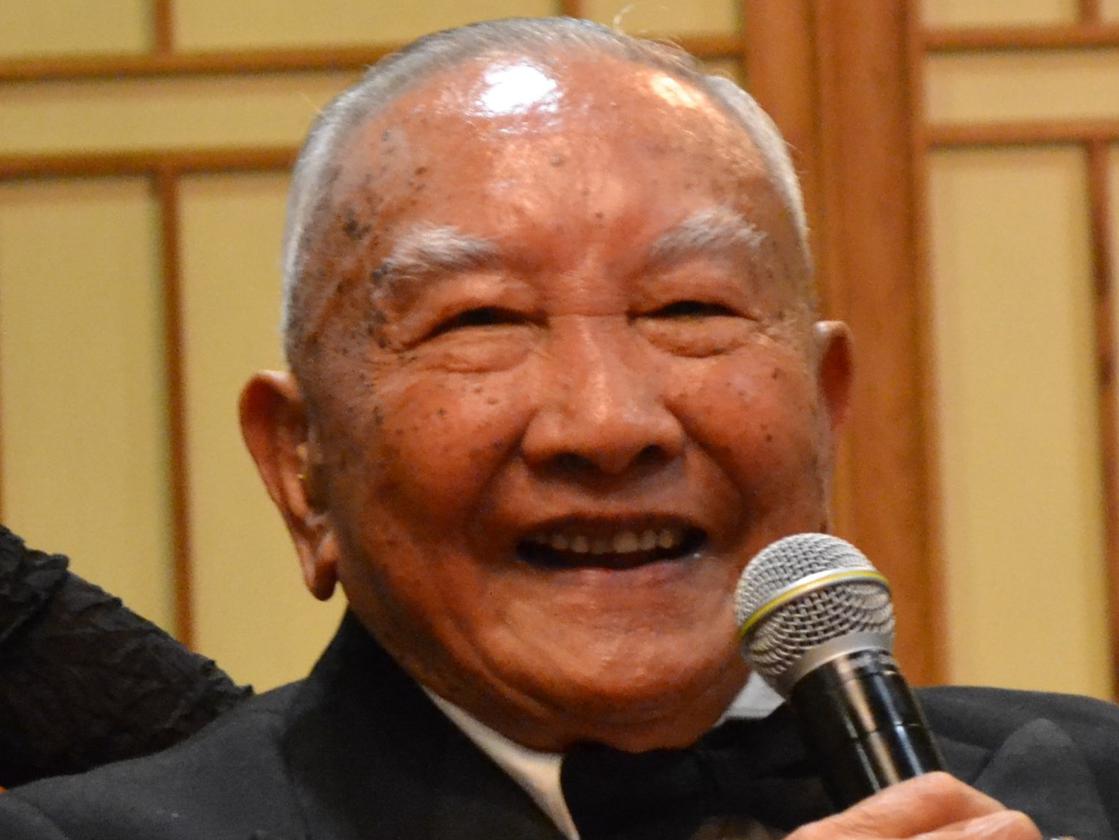


 Photo
Photo
Thomas's obituary
Tom had been living in a retirement community in Oakland, California. Up until 102, Tom was remarkably sharp and energetic, still taking his daily walks, still devouring his favorite steamed dumplings, still playing mah jong around his kitchen table, and still recounting his life story with flawless detail. But for his last two years he steadily declined physically and mentally, with the exception of his enormous appetite (even for institutional pureed food) that he maintained until the very end. So it is with both sadness and relief that we report his passing.
Of course, the world of 1913 was vastly different than that of 2017. Tom grew up in a small village in the mountains of southwest China. He loved to describe the “pomegranates as big as bowling balls” that grew in the surrounding orchards and the weeks-long mule rides that he would take with his father in bringing their fruits to market. When the Japanese began encroaching on China in the 1930s, he left home to enter high school in the provincial capital, organized boycotts of Japanese goods there, and then studied at the national military academy in Nanjing. Upon graduation, Tom was sent to study at the UK’s Royal Military Academy in the years just before Hitler invaded Poland, served as a military attaché in the Chinese Embassy in Washington (where he met and courted our mother Lawreen), and returned to China after Pearl Harbor to coordinate the use of U.S. war materiel.
At the end of the Chinese civil war in 1949, Tom, by then a young general, decided not to retreat to Taiwan with the Nationalist Government. Instead, he became a leader of an underground democratic movement based in Hong Kong. Their “Free China Movement” garnered the secret attention and support of the U.S. during the early days of the Cold War, resulting in Tom and Lawreen (and a growing brood of babies and toddlers) hopscotching from Hong Kong to Tokyo to Saipan to Okinawa. However, the Korean War rendered their quixotic movement superfluous from the perspective of U.S. foreign policy. So Tom and Lawreen received the Cold War’s consolation prize—a one-way boat ticket to America.
Tom then discovered the joy, longings and struggle of the refugee’s life. For five years he stocked cans in a Chinese grocery store in Stockton, California, until the kind judge who presided over the Yang Family’s citizenship ceremony got him a better job as a researcher in a title insurance company. Although he did not love this new profession, it enabled him to join social organizations—like the Kiwanis, Toastmasters and Knights of Columbus—that he did love. After the thaw began in U.S.-China relations during the 1970s, Tom learned that his family in China had not fared well under Mao’s revolution. So he began making regular trips back to his home province of Yunnan. And after Lawreen died in 2002, Tom spent much of his next decade living in Kunming with his nieces and nephews and their children, seemingly closing the circle of his life. But as he approached the century mark, he decided to “come home” yet again, moving back to Oakland for the last leg of his journey.
In his retirement he crisscrossed the hiking trails of the East Bay and Kunming, made won ton and lo mein for his grandchildren, listened to Franciscan meditation tapes on his Walkman, and even with failing eyesight wrote his autobiography on an early-generation Macintosh. He loved dearly his children, his grandchildren, his children's and grandchildren’s partners and their families, and his extended family in China; reveled in traveling the globe to visit them all; and taught by example how to burp loud approval of a fine Chinese meal.
What is most remarkable about Tom’s life was not his interrupted military, diplomatic and political career, but rather the grace and humility with which he accepted the tumult of war and revolution. He never expressed bitterness over his fate, and he never flagged in his kindness towards others or his faith in liberty as humanity’s greatest achievement. In his own humanity our family learned the meaning of personal struggle and the perseverance needed to contribute to a better world.
Part of Tom’s ashes will now rest with Lawreen’s in an Oakland cemetery. We look forward to taking the other part back to his family burial plot in his home village. His headstones in Oakland and Yunlong will mark the great stretches of time and space that Tom traversed in his very long, courageous and loving life. We will remember the spirits of Tom the gentle warrior and of Lawreen the fierce social worker—and carry them with us in our daily lives.
 Send to someone
Share this obituary with others
Want to stay updated?
Get notified when new photos, stories and other important updates are shared.

Send flowers
Share your sympathy. Send flowers from a local florist to Thomas's family or funeral.

Send flowers
Share your sympathy. Send flowers from a local florist to Thomas's family or funeral.
Share this memorial website


How you can help
 Share with others
Created with love by
David Yang.
